Thursday, November 10, 2022

Home prices rose almost everywhere in the US this summer - CNN

In case you needed more evidence of how much home prices have skyrocketed: Even as the housing market was cooling over the summer, prices still rose in 98% of US markets, according to a new report.

From July through September, home prices increased in 181 out of 185 cities tracked by the National Association of Realtors. But the gains had slowed substantially as mortgage rates rose during that time. About half of cities (46%) saw double-digit increases from the year before, down from 80% of cities in the prior quarter.

“Much lower buying capacity has slowed home price growth and the trend will continue until mortgage rates stop rising,” said Lawrence Yun, NAR’s chief economist.

Yun said that because of strong price growth and rising mortgage rates, the median income needed to buy a typical home rose to $88,300 in the third quarter. That’s almost $40,000 more than it was prior to the start of the pandemic.

The average mortgage rate for a 30-year fixed-rate loan during the third quarter – from July to September – was lower than it is now, ranging between 4.99% and 6.70%, according to Freddie Mac. Rates are currently hovering above 7% and expected to go up further as the Federal Reserve continues to take action to rein in inflation.

Where prices rose the most

Prices grew in all parts of the country during the third quarter, but were up the most in the South, rising 11.9% in the third quarter from the year before, according to the report. Prices were up 8.2% in the Northeast, 7.4% in the West, and 6.6% in the Midwest.

Seven of the 10 cities with the biggest year-over-year price jumps were in Florida.

Sarasota, Florida, saw the biggest price jump in the third quarter, up 23.8% from a year earlier. It was followed by the Lakeland and Winter Haven area of Florida, up 21.2% from last year; Myrtle Beach, South Carolina, up by 21.1%; Panama City, Florida, up by 20.5%; and Daytona Beach, Florida, up by 19.6%.

The most expensive markets to buy a home were largely in the West, with half of the top 10 priciest cities in California.

San Jose, California, was the most expensive place to buy a home in the third quarter with the median price hitting $1,688,000, which was up 2.3% from a year before. It was followed by San Francisco, with a median price of $1,300,000; Anaheim, California, at $1,200,000; Honolulu, at $1,127,400; and San Diego, at $900,000.

“The more expensive markets on the West Coast will likely experience some price declines following this rapid price appreciation, which is the result of many years of limited home building,” Yun said. “The Midwest, with relatively affordable home prices, will likely continue to see price gains.”

Adblock test (Why?)


from "price" - Google News https://ift.tt/QjGM4l9
via IFTTT

Consumer price index: Inflation up 7.7% in last 12 months - CNBC

Inflation went down faster than expected in October, dropping to a year-over-year rate of 7.7%, according to new Labor Bureau data published Thursday morning.

Inflation is down from its 9.1% June year-over-year peak, but still nowhere near the Federal Reserve's benchmark target rate of 2%. 

Last month, prices for goods and services increased by 0.4%, which lines up with what big banks and economists were expecting. However, core inflation — which measures all items except volatile food and gas prices — came in lower than expected, with a 0.3% monthly increase. Many big banks expected core inflation to increase by 0.4% or 0.5%.

Despite beating expectations, inflation remains high, with the cost of necessities posting steady gains.

"The pervasiveness of price increases remains problematic," says Greg McBride, chief financial analyst at Bankrate. "In categories that are necessities — shelter, food, and energy — we continue to see large and consistent increases. Any meaningful relief for household budgets is still somewhere over the horizon."

The costs for gas, food and shelter continue to rise due to a variety of factors, including supply chain issues, labor disruptions and other events like the war in Ukraine.

Shelter accounts for over half of the overall monthly increase, rising 0.8% after steady gains of 0.7% in the two previous months. Energy prices surged in October with the price of gas up 4% and fuel oil surging 19.8% after declining the previous month.

Here's how much prices have increased over the past year for certain household goods and services, according to the Labor Department:

  • Airline fares: 42.9%
  • Gas: 17.5% 
  • Bread: 14.8%
  • Electricity: 14.1%
  • Food at home: 12.4%
  • New vehicles: 8.4%
  • Food away from home: 8.6%
  • Used cars and trucks: 2%
  • Shelter: 6.9%
  • Medical care services: 5.4%
  • Apparel: 4.1%

Rate hikes will continue as long as inflation remains high

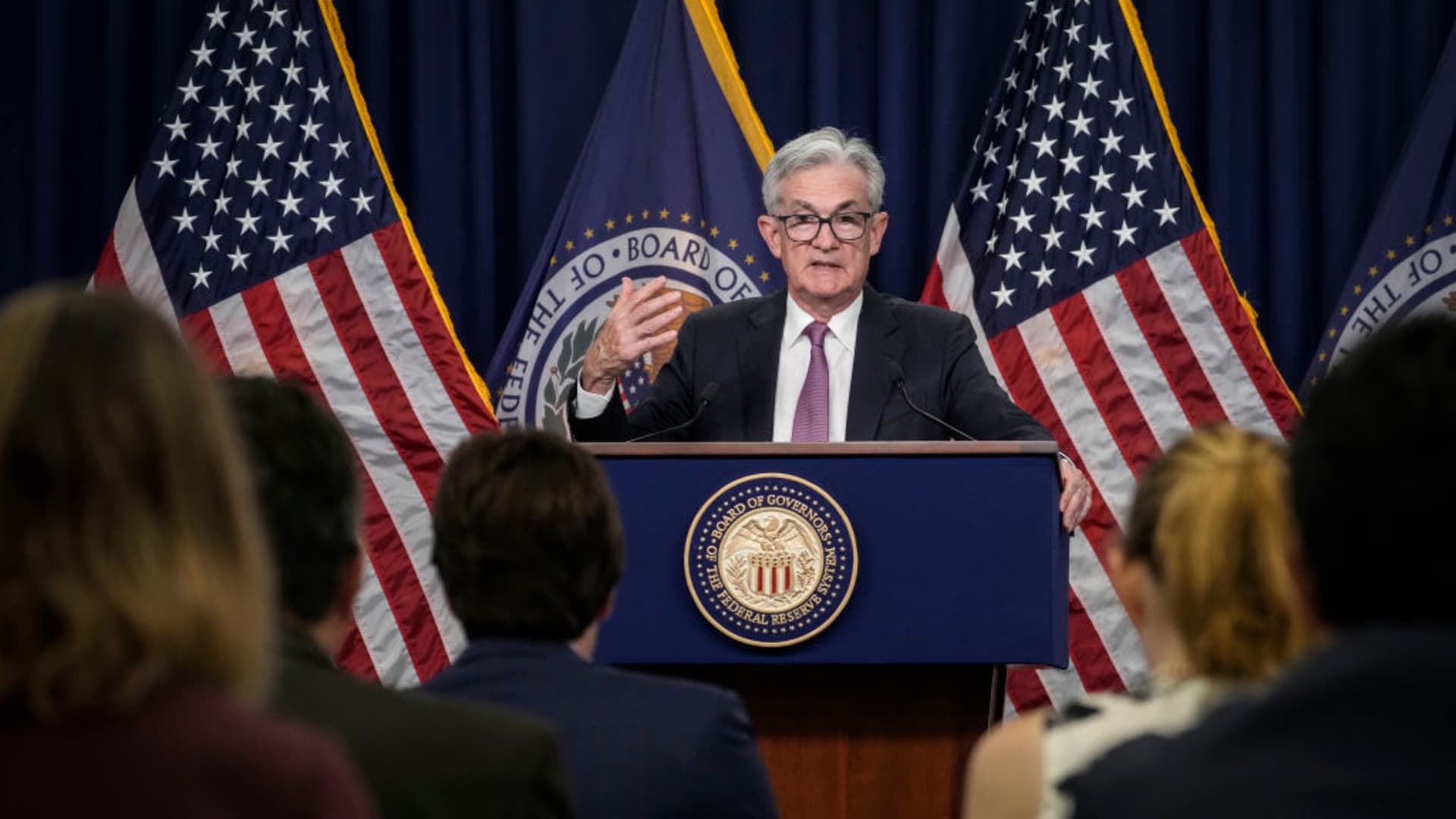
Even with inflation decreasing more than expected, continued interest hikes are expected going into 2023. The Federal Reserve uses interest rate hikes to discourage spending, but hikes also increase debt costs for consumers, which affects how much people pay for loans and financing.

But rate hikes don't affect prices right away. They have a lag effect that can last several months, if not years, based on who you ask. This might explain why inflation has hovered around 8% for most of the year, despite all the interest rate increases since March.

Most observers expect the Fed to implement a 0.5 percentage point hike when it meets in December. With better-than-expected inflation numbers this month, it's less likely that the Fed will implement its fifth consecutive "jumbo" hike of 0.75 percentage point since the Fed began raising rates in March.

Want to earn more and work less? Register for the free CNBC Make It: Your Money virtual event on Dec. 13 at 12 p.m. ET to learn from money masters like Kevin O'Leary how you can increase your earning power.

Sign up now: Get smarter about your money and career with our weekly newsletter

Adblock test (Why?)


from "price" - Google News https://ift.tt/gLWU1oP
via IFTTT

Price increases slow as U.S. consumer inflation eases to 7.7 percent - PBS NewsHour

WASHINGTON (AP) — Price increases moderated in the United States last month in the latest sign that the inflation pressures that have gripped the nation might be easing as the economy slows and consumers grow more cautious.

Consumer inflation reached 7.7 percent in October from a year earlier and 0.4 percent from September, the Labor Department said Thursday. The year-over-year increase, a slowdown from 8.2 percent in September, was the smallest rise since January. Excluding volatile food and energy prices, “core” inflation rose 6.3 percent in the past 12 months and 0.3 percent from September.

The numbers were all lower than economists had expected.

READ MORE: How inflation spread across different sectors, making it harder to tame

From September to October, the prices of clothing, used cars and medical care all fell. Food price increases slowed. By contrast, energy prices rebounded last month after having declined in August and September.

Even with last month’s tentative easing of inflation, the Federal Reserve is widely expected to keep raising interest rates to try to stem persistently high price increases. But Thursday’s better-than-expected data raised the possibility that the Fed could decide to slow its rate hikes — a prospect that sent stock prices jumping immediately after the government issued the figures Thursday morning.

Many economists have warned that in continuing to tighten credit, the central bank is likely to cause a recession by next year. So far this year, the Fed has raised its benchmark interest rate six times in sizable increments, heightening the risk that prohibitively high borrowing rates — for mortgages, auto purchases and other high-cost expenses — will tip the world’s largest economy into recession.

Some economists suggested that the latest inflation data shows that the Fed’s hikes are beginning to achieve their goal.

“The data will be welcome news for the (Fed), finally showing some response in prices” to the rate hikes,” said Rubeela Farooqi, chief U.S. economist at High Frequency Economics.”

Inflation was near the top of many voters’ minds in the midterm congressional elections that ended Tuesday. Their economic anxieties contributed to the loss of Democratic seats in the House of Representatives, though Republicans failed to score the huge political gains that many had expected.

Even before the latest figures, inflation by some measures had begun to ease and could continue to do so in coming months. Most gauges of workers’ wages, for example, show that the robust pay increases of the past 18 months have leveled off and have begun to fall. Though worker pay is not a primary driver of higher prices, it can compound inflationary pressures if companies offset their higher labor costs by charging their customers more.

Except for automakers, which are still struggling to acquire the computer chips they need, supply chain disruptions have largely unsnarled. Shipping costs have dropped back to pre-pandemic levels. The backup of cargo ships off the port of Los Angeles and Long Beach has been cleared.

And as declines in new rents that have emerged in real-time measures from such sources as ApartmentList and Zillow begin to be captured in the government’s forthcoming measures, that factor should also reduce inflation.

Even as many fear that the economy will fall into recession next year, the nation’s job market has remained resilient. Employers have added a healthy average of 407,000 jobs a month, and the unemployment rate is just 3.7 percent, close to a half-century low. Job openings are still at historically high levels.

But the Fed’s rate hikes have inflicted severe damage on the American housing market. The average rate on a 30-year fixed mortgage has more than doubled over the past year, topping 7 percent before falling slightly last week. As a result, investment in housing collapsed in the July-September quarter, falling at a 26 percent annual rate.

Higher mortgage rates have depressed sales. Home prices are slowing sharply compared with a year ago and have begun to fall on a monthly basis. The cost of a new apartment lease is also declining.

AP Economics Writer Christopher Rugaber contributed to this report.

Adblock test (Why?)


from "price" - Google News https://ift.tt/eBmcyRq
via IFTTT

EU executive to outline gas price 'correction mechanism' on Friday -sources - Reuters

BRUSSELS, Nov 10 (Reuters) - The European Commission will propose a gas price "correction mechanism" to the 27 EU states on Friday, a measure aimed at easing price spikes but not the firm cap sought by many countries, according to sources and documents seen by Reuters.

The European Union has been in a tug of war over a gas price cap, with a dozen-or-so member countries calling for various versions of such a measure to cut prices amid an acute energy crunch that is driving record-high inflation.

But Germany, the bloc's biggest economy, the Netherlands and the EU executive Commission say a cap would risk putting off suppliers and reduce incentives to bring down gas consumption.

The Commission told EU countries that a "comprehensive hard" cap on TTF, Europe's main natural gas futures market used as the benchmark price, would all but fail to lower prices while also drawing legal and supply risks, according to an EU diplomat.

"The risks outweigh the benefits," said the diplomat.

An EU official said the Commission - at a closed-door meeting with 27 national envoys starting at 0800 GMT on Friday - would outline thinking around a "market correction mechanism" instead, which would amount to "a price corridor" on TTF.

"You do not jeopardise the security of supply by putting a fixed price below the market as we are in global competition for LNG (liquefied natural gas)," said the official.

"You create a corridor for what the prices would be, hopefully reducing volatility," added the person.

'TEMPORARY INTERVENTION'

Countries including Poland and Belgium that have long campaigned for a tool to reduce runaway prices have been angered by the Commission's line, saying it falls short of the cap they want.

A second EU diplomat said the Commission's proposal amounted to a price deal between suppliers and their customers that would fall between TTF and cheaper LNG until the end of their contracts, an insurance against price swings for both sides.

"It's not a cap in the sense that it does not clearly lower the price. It just spreads it out over time. It's not enough for those wanting to clearly cut the price," said the diplomat.

The disagreement risks overshadowing a Nov. 24 meeting of EU energy ministers who otherwise hope to approve new policies to mitigate the energy crisis, including speeding up renewable energy permits, launching joint gas purchases in the EU and working out a new LNG price benchmark.

With the Commission's input, the diplomats on Friday will discuss a draft decision by the ministers, which was last updated on Nov. 8 and seen by Reuters on Thursday.

It said that "a targeted and temporary emergency intervention in the TTF spot prices may be needed in order to avoid excessive price episodes" after other measures fail.

"In order not to affect intra-EU flows which should continue to allow for natural gas to go where it is most needed, other (European) Union gas trading hubs may be linked to the corrected TTF spot price via a dynamic price corridor," it read.

Reporting by Gabriela Baczynska Editing by Susan Fenton and Mark Potter

Our Standards: The Thomson Reuters Trust Principles.

Opinions expressed are those of the author. They do not reflect the views of Reuters News, which, under the Trust Principles, is committed to integrity, independence, and freedom from bias.

Adblock test (Why?)


from "price" - Google News https://ift.tt/PJG67Z8
via IFTTT

Wednesday, November 9, 2022

Disney Plus’ annual subscription offers discount before price increase - Polygon

Disney Plus is raising its prices soon, but you can still get in a little cheaper for the next month. For now, Disney Plus’ Premium ad-free subscription is $7.99 a month with a full year available for $79.99, but on Dec. 8 that price will go up to $10.99 a month and $109.99 for a full year. So if you want the discounted price, you’ll have to subscribe before the Dec.8 change.

This increase is part of a larger shift in Disney Plus’ pricing structure. On the same day the Premium no-ads plan increases in price, Disney is also introducing a new Basic subscription plan at the cheaper $7.99 price point which will also include ads. Aside from removing ads, the Premium plan will allow users to download programs to watch offline as well, while the Basic plan won’t.

The price increase for Disney Plus as a whole is pretty easy to understand, especially considering the platform’s success. During its latest earnings call, Disney announced that its streaming platform added 12.1 million subscribers in its fourth quarter, bringing it up to over 162 million subscribers around the world. With growth that impressive, it’s no surprise that Disney has decided to raise the price a bit in favor of an ad-supported option.


Adblock test (Why?)


from "price" - Google News https://news.google.com/__i/rss/rd/articles/CBMiUWh0dHBzOi8vd3d3LnBvbHlnb24uY29tLzIzNDQ5NDA0L2Rpc25leS1wbHVzLXN1YnNjcmlwdGlvbi1kaXNjb3VudC1wcmljZS1pbmNyZWFzZdIBAA?oc=5
via IFTTT

Drugmakers Seek Prolonged Shield From Medicare Price Negotiation - Bloomberg Law

European Commission Says Gas Price Cap Is Impossible - OilPrice.com

Julianne Geiger

Julianne Geiger

Julianne Geiger is a veteran editor, writer and researcher for Oilprice.com, and a member of the Creative Professionals Networking Group.

More Info

Related News

The European Commission told countries at a Monday seminar this week that there was no way to create a gas price cap as previously requested by EU leaders.

Instead, the EC has proposed a “market correction mechanism.”

Earlier on Tuesday, it was revealed that after the gas price cap discussions had been dragging on for weeks, with no decision reached—and that whatever agreement was finalized, it would probably not include a price cap on imports, based on the options the EC was currently considering. But while it was unlikely as of Tuesday morning, it is decided less likely now—impossible, in fact, according to new Reuters sources described as diplomats.

According to the EC, there is no way to cap the price of gas that would not affect existing long-term contracts.  

The original idea of a price cap on gas imports into the European Union was originally suggested by several EU members, including Belgium, Greece, Italy, and Poland. The European Commission—the executive arm of the European Union—was never in favor of the gas price cap idea.

However, it did agree to discuss it with member states’ leadership, and indeed it did—for weeks, in fact. The EC has now concluded from those talks, however, that there was no way to implement a gas price cap in a way that would preserve existing long-term contracts.

A market correction mechanism is now being considered in its place. 

More than half of the EU member states supported the gas price cap idea. The other options for mitigating Russia’s revenues from the sale of natural gas without Europe freezing that were already on the table were a joint gas buying agreement and a reduction in gas demand.

By Julianne Geiger for Oilprice.com

More Top Reads From Oilprice.com:

Join the discussion | Back to homepage


Related posts

Adblock test (Why?)


from "price" - Google News https://ift.tt/NWO5qFE
via IFTTT

Companies' reluctance to roll back price rises poses US inflation risk - Financial Times

[unable to retrieve full-text content] Companies' reluctance to roll back price rises poses US inflation risk    Financial Times from...