Friday, November 4, 2022

G7 Russian oil price cap applies only to seaborne crude -official - Reuters

WASHINGTON, Nov 4 (Reuters) - The price cap on Russian oil exports to be imposed by G7 countries and Australia next month will apply only to seaborne cargoes through the first landed sale and will exclude shipping and trading costs, a coalition official said on Friday.

Details of the price cap are being finalized as a Dec. 5 deadline for launching the scheme and a European Union embargo on Russian crude approaches, but discussions on the level of the price cap are still continuing. The plan aims to scales back Moscow's oil revenues to levels prior to its invasion of Ukraine while keeping Russian crude on the global market to avoid further price spikes.

Coalition officials told Reuters on Thursday that the price level be a fixed per-barrel dollar price that would be regularly reviewed, rather than a discount from market prices.

Under the loading rules, first reported by the Wall Street Journal, any oil that is re-sold while the crude is still en route to a landed destination must be priced at or below the cap level, the official said.

"Once the oil completes its first landed sale, it can be sold at market prices," the coalition official said. "As long as it doesn't go back out to sea it's no longer 'seaborne' Russian oil."

But if it is loaded back onto a tanker to be shipped elsewhere, the price cap again applies unless the crude has been substantially refined into other products, the official added.

The cap will not include the cost of freight or other trading and transportation costs, the official said, adding "In other words it will only apply to the physical molecules of Russian crude and refined products themselves -- only the oil is capped.

Official oil price cap guidance is still under development and will be released before Dec. 5, the official added.

Reporting by David Lawder; Editing by David Gregorio

Our Standards: The Thomson Reuters Trust Principles.

Adblock test (Why?)


from "price" - Google News https://ift.tt/DfFKE0u
via IFTTT

Thursday, November 3, 2022

EXCLUSIVE G7 coalition has agreed to set fixed price for Russian oil -source - Reuters.com

WASHINGTON/LONDON, Nov 3 (Reuters) - The Group of Seven rich nations and Australia have agreed to set a fixed price when they finalize a price cap on Russian oil later this month, rather than adopting a floating rate, sources said on Thursday.

U.S. officials and G7 countries have been in intense negotiations in recent weeks over the unprecedented plan to put a price cap on sea-borne oil shipments, which is scheduled to take effect on Dec. 5 - to ensure EU and U.S. sanctions aimed at limiting Moscow's ability to fund its invasion of Ukraine do not throttle the global oil market.

“The Coalition has agreed the price cap will be a fixed price that will be reviewed regularly rather than a discount to an index," said a coalition source, who was not authorized to speak publicly. "This will increase market stability and simplify compliance to minimize the burden on market participants.”

The initial price itself has not been set, but should be in coming weeks, multiple sources said. Coalition partners agreed to regularly review the fixed price and revise it as needed, the source said, without disclosing further details.

Pegging the price as a discount to some index would have resulted in too much volatility and potential price swings, the source added.

The coalition worried that a floating price pegged below the Brent international benchmark might enable Russian President Vladimir Putin to game the mechanism by reducing supply, a second source with knowledge of the discussions said.

Putin could benefit from a floating price system because the price for his country's oil would also rise if Brent spiked due to a cut in oil from Russia, one of the world's largest petroleum producers. The downside of the agreed fixed price system is that it will require more meetings of the coalition and bureaucracy to review it regularly, the source said.

U.S. Treasury Secretary Janet Yellen and other G7 officials argue the price cap, set to begin Dec. 5 on crude and Feb. 5 on oil products, will squeeze funding to Russia without cutting supply to consumers. Russia has said it will refuse to ship oil to countries that set price caps.

Shipping services are eager to see more details about the G7 plan which is due to take effect in a month.

A steady price cap could enable insurers to more confidently roll over contracts and initiate new ones without fear that the price could be adjusted by the countries buying Russian oil, which could have potentially exposed insurers to sanctions.

No immediate comment was available from Treasury or the embassies of coalition members, which include the G7 rich nations, the European Union and Australia.

Reporting by Andrea Shalal and Timothy Gardner in Washington and Noah Browning in London Editing by Heather Timmons and Matthew Lewis

Our Standards: The Thomson Reuters Trust Principles.

Adblock test (Why?)


from "price" - Google News https://ift.tt/5yY83s7
via IFTTT

Wednesday, November 2, 2022

Study: Home Price Declines Hitting Western U.S. Markets - Florida Atlantic University


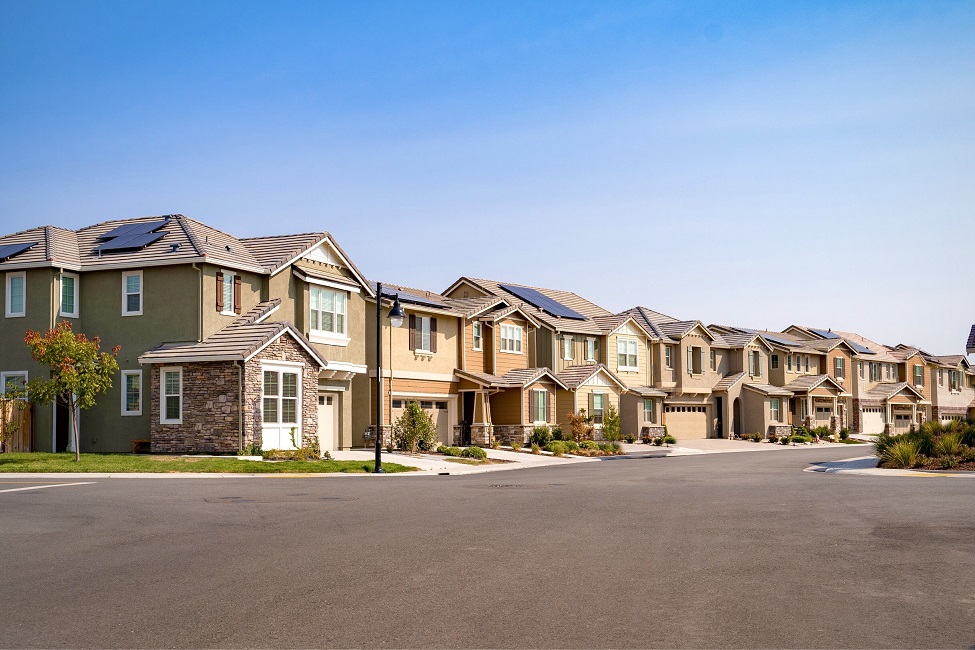
Average home prices are falling in 39 of the 100 largest U.S. housing markets and prices in an additional 18 metropolitan areas are expected to decline soon, according to researchers at Florida Atlantic University and Florida International University.

The September price drops from market peaks occurred mainly in the West, with the largest in San Jose, California, at 6.3 percent. Austin, Texas (5.5 percent); San Francisco (4.4 percent); Boise, Idaho (4.2 percent); and Salt Lake City, Utah (3.8 percent) round out the top five.

Meanwhile, premiums are falling in 18 metro areas, including Atlanta, Chicago, Houston, New York and Orlando. Premiums are the percentage above long-term pricing trends that buyers must pay to secure properties. A premium decline usually is a precursor to a drop in average price.

The researchers also rank the most overvalued housing markets by studying long-term pricing trends back to 1996, with data covering single-family homes, townhomes, condominiums and co-ops.

Cape Coral-Fort Myers is the nation’s most overvalued market, with buyers paying a premium of 68.69 percent. Four other Florida markets are in the top 10, with the top 17 markets all overvalued by more than 50 percent. 

The full rankings with interactive graphics can be found here.

“Housing markets across the country are definitely slowing down and appear to be reaching the peaks of their current housing cycles,” said Ken H. Johnson, Ph.D., an economist in FAU’s College of Business. “Buying a home now in much of the country is risky because values likely will fall if they haven’t already, but I doubt we’ll see anything close to the downturns that occurred 15 years ago.”

The rankings don’t consider how expensive a market traditionally is. High-cost areas such as New York and San Francisco are among the least overvalued because homes in those metros are selling relatively close to where they should be, based on historical trends, according to the study.

While average prices continue rising in most of Florida, Cape Coral-Fort Myers (before the impact of Hurricane Ian) and North Port-Bradenton showed the state’s first price declines from their market peaks.

“It is hard to say where prices will go from here in Florida,” said Eli Beracha, Ph.D., of FIU’s Hollo School of Real Estate. “But it seems most likely that Florida housing markets will fare better than most other markets across the country due to the persistent shortage of homes for sale and the pace at which people are relocating to the state.”

In general, markets with increasing population and significant inventory issues will see fewer impacts on prices, while other areas with stagnant or declining populations and more homes on the market could see significant price declines, the researchers said.

-FAU-

Adblock test (Why?)


from "price" - Google News https://ift.tt/uMcRA6y
via IFTTT

Food Prices Soar, and So Do Companies’ Profits - The New York Times

Some companies and restaurants have continued to raise prices on consumers even after their own inflation-related costs have been covered.

A year ago, a bag of potato chips at the grocery store cost an average of $5.05. These days, that bag costs $6.05. A dozen eggs that could have been picked up for $1.83 now average $2.90. A two-liter bottle of soda that cost $1.78 will now set you back $2.17.

Something else is also much higher: corporate profits.

In mid-October, PepsiCo, whose prices for its drinks and chips were up 17 percent in the latest quarter from year-earlier levels, reported that its third-quarter profit grew more than 20 percent. Likewise, Coca-Cola reported profit up 14 percent from a year earlier, thanks in large part to price increases.

Restaurants keep getting more expensive, too. Chipotle Mexican Grill, which said prices by the end of the year would be nearly 15 percent higher than a year earlier, reported $257.1 million in profit in the latest quarter, up nearly 26 percent from a year earlier.

Although food companies are prominent examples of how rapid inflation is being passed from producers to consumers, the trend is evident across a wide variety of industries. Executives from banks, airlines, hotels, consumer goods companies and other firms have said they are finding that customers have money to spend and can tolerate higher prices.

And this makes it harder for the Federal Reserve to achieve its goal of bringing down inflation by aggressively increasing interest rates. Fed officials are set to announce their latest rate decision on Wednesday afternoon.

For years, food companies and restaurants generally raised prices in small steps, worried that big increases would frighten consumers and send them looking for cheaper options. But over the last year, as wages increased and the cost of the raw ingredients used to make treats like cookies, chips, sodas and the materials to package them soared, food companies and restaurants started passing along those expenses to customers.

But amid growing concerns that the economy could be headed for a recession, some food companies and restaurants are continuing to raise prices even if their own inflation-driven costs have been covered. Critics say the moves are all about increasing profits, not covering expenses. Coca-Cola, PepsiCo and Chipotle did not respond to requests for comment.

“The recent earnings calls have only reinforced the familiar and unwelcome theme that corporations did not need to raise their prices so high on struggling families,” said Kyle Herrig, the president of Accountable.US, an advocacy organization. “The calls tell us corporations have used inflation, the pandemic and supply chain challenges as an excuse to exaggerate their own costs and then nickel and dime consumers.”

So far, food companies and restaurants have been able to raise prices because the majority of consumers, while annoyed that the trip to the grocery store or drive-through for takeout costs more than it did a year ago, have been willing to pay. But there are plenty of shoppers, including those with lower incomes or retirees on fixed budgets, who say the higher prices have led to changes in their routines.

Diane English, an 80-year-old partly retired artist who lives with her partner in Asheville, N.C., said she now shops at lower-price grocery stores like Aldi so she can afford her groceries. She also has stopped buying certain foods because they’re simply too expensive.

“I can’t remember the last time we had steak,” said Ms. English. A couple of weeks ago, she said, she looked at the meat department at the Fresh Market, a grocery store chain, and was dispirited at the high prices she found.

“We’re not going to do that,” she said. “We can’t.”

Over the last year, the price of food eaten at home has soared 13 percent, according to the Bureau of Labor Statistics, with some items spiking even higher. Cereals and bakery goods are up 16.2 percent from a year ago, closely followed by dairy, which has risen 15.9 percent.

The cost of eating at restaurants has risen 8.5 percent over the same period.

Even food executives have been surprised by how well the higher food prices have been accepted.

On a call with investors, James Quincey, Coca-Cola’s chief executive, said customers continued to buy the company’s products despite economic challenges.

“In the face of these pressures, consumers stayed resilient, and we continue to invest behind our loved brands to drive value in the marketplace and growth in our business,” Mr. Quincey said.

Amir Hamja for The New York Times

This summer, on a call with other Wall Street analysts, Jason English, an analyst at Goldman Sachs, noted that the food giant Conagra Brands had been able to price its products above inflation rates and recovered its profit margins.

Sean Connolly, the president and chief executive of Conagra, said that manufacturers saw their profits hit early by inflation and that maintaining robust profits was crucial to developing new products.

“We have to have healthy margins to be able to build out that innovation and get it to our customers in the market,” Mr. Connolly said on the call. Conagra did not respond to a request for comment for this article.

Likewise, investors and analysts are closely watching the continued price hikes at Chipotle, wondering when it will become too much for its customers. In late October, the company said its profit margin widened in the third quarter, since it was able to increase the prices it charges faster than its own costs rose. The company said its prices in the final three months of the year would be nearly 15 percent higher than they were a year earlier.

“The average entree was around $8 nationally two years ago, and they’ve maybe taken $1.50 in price in the past two years,” said Sharon Zackfia, group head of consumer research at William Blair & Company.

She added: “I am intrigued by what happens when commodities fall again, and how do restaurants offer more value to the consumer without lowering prices? In the long arc of history, most restaurants do not lower prices.”

Still, some cracks are emerging. Not all companies have increased profits. Profit at McDonald’s, for example, fell because of how the strong U.S. dollar has weakened other global currencies. High prices for deli meat, fresh fish and frozen dinners have led some shoppers to stop buying those products, according to data from Information Resources, a research firm.

Executives at Darden Restaurants said in September on a call with analysts that households with less than $50,000 in annual income were feeling the overall effects of inflation and eating less frequently at its Olive Garden and Cheddar’s restaurant chains. Rick Cardenas, the chief executive of Darden, said, “We are seeing softness with these consumers while conversely, we are seeing strength with guests in higher income households.”

Nicole Blaha, 53, who lives in Scottsdale, Ariz., started going to Walmart more frequently to stock up on things like granola bars and cereals to save money. She also uses an app called Ibotta to receive cash back on some of her purchases. It is one area of her life that has been affected by inflation where she feels she can make substantiative changes.

“I actually find it easier to kind of work with the groceries piece and try to save some money where I can,” Ms. Blaha said. “You can’t argue with the electric bill.”

In grocery stores, consumers began increasingly switching to less expensive store brands in March, executives at TreeHouse Foods, a company that makes cookies, crackers, pickles and beverages for retailers, told Wall Street analysts on a call in August.

Steve Oakland, the chief executive of TreeHouse, told analysts that “consumers are making changes to reduce their spending, which include embracing store brands and the value that they represent.”

Adblock test (Why?)


from "price" - Google News https://ift.tt/nVrQDtj
via IFTTT

Oil Prices Rise As Bullish Sentiment Builds - OilPrice.com

Irina Slav

Irina Slav

Irina is a writer for Oilprice.com with over a decade of experience writing on the oil and gas industry.

More Info

Premium Content

  • Oil prices were up early on Wednesday morning on renewed rumors that China is preparing to loosen its Covid restrictions.
  • The American Petroleum Institute had already added to bullish sentiment on Tuesday afternoon when it reported another decline in oil inventories.
  • An increasing number of analysts see oil prices rising back above $100, with multiple bullish catalysts looming in the next couple of months.

Crude oil began trade today with a gain on the back of expectations that China may begin to ease its Covid restrictions and on data from the American Petroleum Institute pointing to another decline in U.S. crude oil inventories.

China’s Covid lockdowns have been one of the big headwinds for oil prices, keeping a lid on any rally since the summer as one of the world’s biggest consumers continues with its zero-Covid policy.

Yet stock price movement data this week reflects growing hopes that Beijing will soon begin to relax restrictions, which would have a strong positive effect on oil demand and, therefore, prices.

Meanwhile, the API estimated that crude oil inventories in the United States had shed 6.53 million barrels last week, with gasoline stocks also declining, by 2.64 million barrels, while distillate stocks added a modest 865,000 barrels, according to the industry group.

Government data on crude oil and fuel inventories is due out later today.

On Tuesday, crude oil benchmarks Brent and WTI both gained about 2 percent thanks to the news from China but also to a weaker U.S. dollar, after their first monthly gain since May, as October proved cumulatively positive.

Analysts quoted by Reuters in a recent report have pointed to even higher prices, too, citing the OPEC+ production cuts, record U.S. exports, and the possibility that the Biden administration will stop releasing crude from the strategic petroleum reserve.

Meanwhile, OPEC reported steady production rates through October despite an agreement to cut output by a modest 100,000 bpd, which was more symbolic than actual with so many members of the cartel already falling short of their quotas.

Russia’s October output, however, was significantly lower than a year ago, at 9.9 million bpd. This compares to an OPEC+ quota of 11 million bpd.

By Irina Slav for Oilprice.com

More Top Reads From Oilprice.com:


Download The Free Oilprice App Today

Back to homepage


Related posts

Adblock test (Why?)


from "price" - Google News https://ift.tt/M48Yhme
via IFTTT

Tuesday, November 1, 2022

More Hospitals Complying With Price Transparency Rule Requirements - RevCycleIntelligence.com

[unable to retrieve full-text content]

More Hospitals Complying With Price Transparency Rule Requirements  RevCycleIntelligence.com

from "price" - Google News https://ift.tt/p01lEO4
via IFTTT

This city paid $1.1M to keep faucets running through March as the price of water skyrockets in California - CNN

CNN  — 

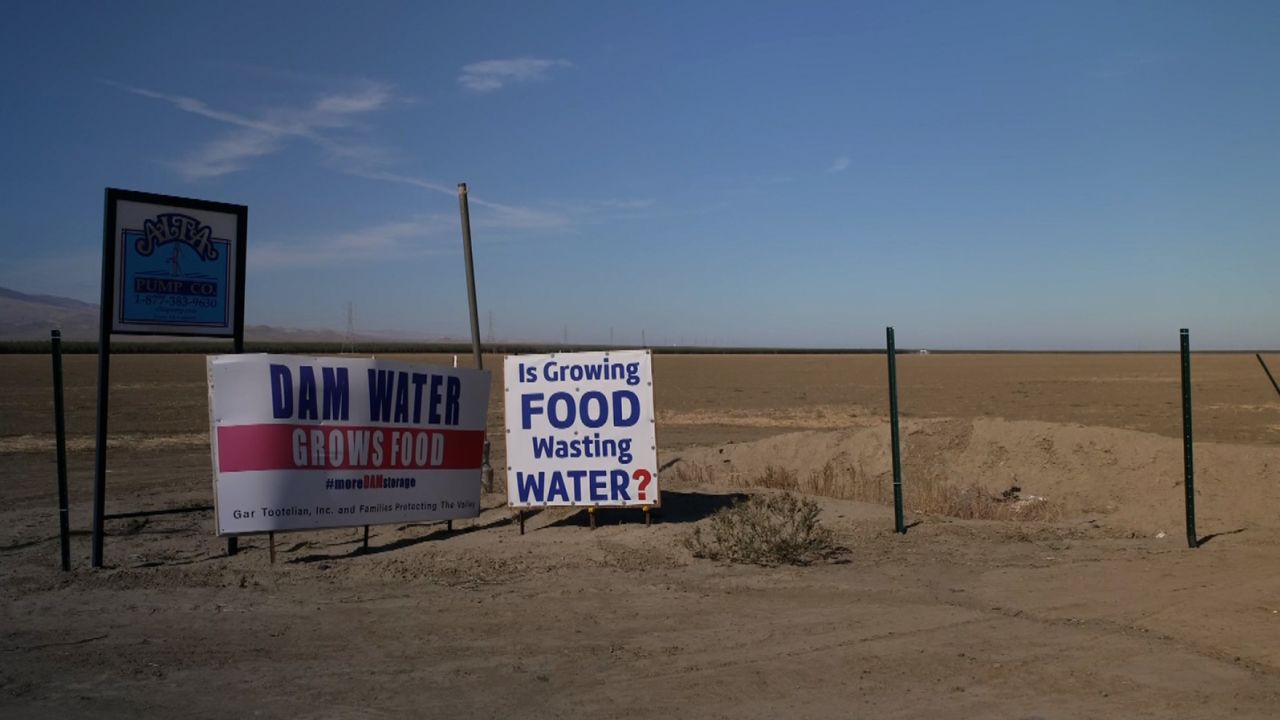
Miles of brittle, uprooted almond trees lay dead on their sides on parched farmland in Coalinga, California, as an intensifying drought, new restrictions and skyrocketing water prices are forcing farmers to sacrifice their crops. Roadside signs warn against watering front lawns as residents brace for higher water bills as the precious resource disappears.

This is what a city on the brink of running out of water looks like.

“We can’t continue this. It’s not sustainable for our community,” Coalinga city councilman Adam Adkisson told CNN.

Coalinga usually gets its water through an aqueduct which runs from the San Luis Reservoir, about 70 miles northwest of the city. But as the West’s megadrought pushes reservoir levels to precarious new lows, the US Bureau of Reclamation this year reduced the amount of water Coalinga could take from the reservoir by 80%, city officials told CNN.

The restriction left Coalinga short about 600-acre feet of water through March 2023, which is nearly 200 million gallons, and the equivalent of about 300 Olympic-sized swimming pools.

With the city on track to run out of water by mid- to late November, officials turned to the increasingly expensive open market to make up the difference. They finalized a purchase from a California public irrigation district last week.

The city’s price tag for life’s most basic necessity was roughly $1.1 million dollars. Adkisson tells CNN the same amount of water used to cost $114,000.

The Nasdaq Veles California Water Index, which tracks water transactions in the state, showed the price has gone from around $200 in 2019 to more than $1,000 today for the amount of water it would take to fill half of an Olympic-sized pool.

“I was just floored,” Adkisson said of their water purchase. “I could not believe they could sell water at that price — but that was actually a cheap rate, that’s the cheapest rate we found.”

The biggest concern is for the residents of Coalinga. It is the water residents use for life’s basic activities; to bathe, cook and clean. The city announced Monday the state approved a grant request to help offset its million-dollar water bill, which will likely ease residents’ costs.

“We are a very poor community,” Adkisson said. “These people out here that you see walking by, driving by, cannot afford a 1,000% increase in their water bills.”

This is the first time Coalinga has had to buy water on the open market. But as the climate crisis intensifies the West’s drought and rainy winters become few and far between, local leaders fear they are heading into a financially unsustainable future, where water can be sold to the highest bidder.

“Sure, there is supply and demand,” Adkisson said. “But for the basic needs of humans we need the water to be at an affordable rate.”

The Coalinga city sign warns residents against watering front lawns amid the drought.
Farmers grow frustrated as the cost of water rises precipitously in California, putting their food crops at risk.

California’s soaring water prices are squeezing the farmers around Coalinga, too. Many are fallowing farmland to save water which has become unaffordable.

Farmers Deedee and Tom Gruber told CNN their water allocations have decreased to amounts insufficient to grow their 11 crops, which include thirsty walnuts and almonds. The Grubers estimate the water needed to grow just one of their crops next season — walnuts — would cost them $40,000.

“It would cost us more for water than what we will get for our walnuts,” Deedee Gruber told CNN.

California farmers say water scarcity, tightening water restrictions and now skyrocketing water prices are making it impossible for farmers to grow crops at all. The Grubers believe it will culminate in two ways: bankrupt farmers and higher food prices at the nation’s groceries.

From protests at the California’s state capitol this week to a living room full of worried farmers, California State Senator Melissa Hurtado, a Democrat who represents part of California’s southern Central Valley, has been listening to farmers’ stories about how drought and high water prices have affected them.

In an August letter, Hurtado and a bipartisan group of California legislators urged the US Justice Department to investigate “potential drought profiteering.” Hurtado suspects there could be price gouging in drought-stricken western states.

In an email response to Hurtado’s letter, the Justice Department said in October the complaint was “forwarded to the appropriate legal staff for further review.” The agency declined comment to CNN on what if any investigative actions it might take.

“People are making money off of less water availability,” Hurtado told CNN. “And that’s hurting real people — real farmers and real communities.”

Adblock test (Why?)


from "price" - Google News https://ift.tt/SeWvrKC
via IFTTT

Companies' reluctance to roll back price rises poses US inflation risk - Financial Times

[unable to retrieve full-text content] Companies' reluctance to roll back price rises poses US inflation risk    Financial Times from...