[unable to retrieve full-text content]
More Hospitals Complying With Price Transparency Rule Requirements RevCycleIntelligence.comfrom "price" - Google News https://ift.tt/p01lEO4
via IFTTT
[unable to retrieve full-text content]
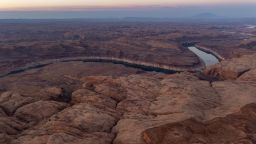
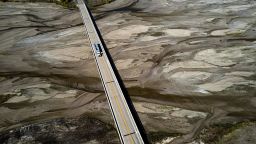
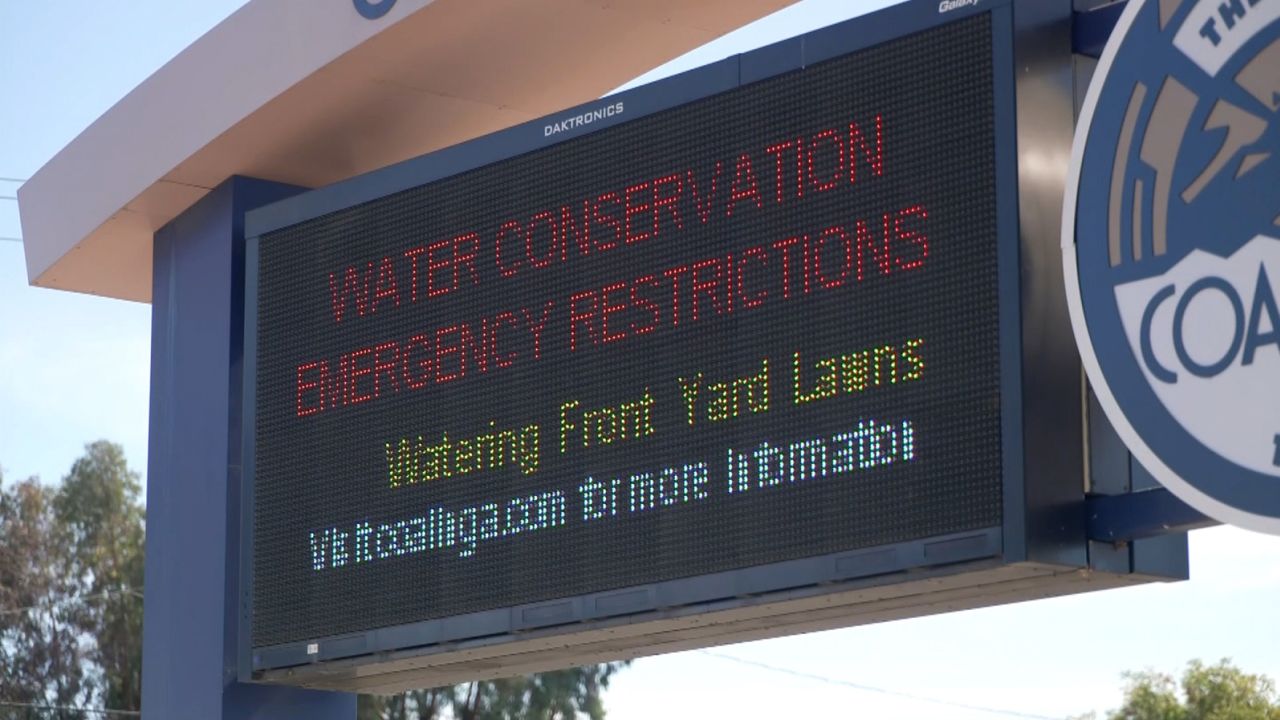
More Hospitals Complying With Price Transparency Rule Requirements RevCycleIntelligence.comMiles of brittle, uprooted almond trees lay dead on their sides on parched farmland in Coalinga, California, as an intensifying drought, new restrictions and skyrocketing water prices are forcing farmers to sacrifice their crops. Roadside signs warn against watering front lawns as residents brace for higher water bills as the precious resource disappears.
This is what a city on the brink of running out of water looks like.
“We can’t continue this. It’s not sustainable for our community,” Coalinga city councilman Adam Adkisson told CNN.
Coalinga usually gets its water through an aqueduct which runs from the San Luis Reservoir, about 70 miles northwest of the city. But as the West’s megadrought pushes reservoir levels to precarious new lows, the US Bureau of Reclamation this year reduced the amount of water Coalinga could take from the reservoir by 80%, city officials told CNN.
The restriction left Coalinga short about 600-acre feet of water through March 2023, which is nearly 200 million gallons, and the equivalent of about 300 Olympic-sized swimming pools.
With the city on track to run out of water by mid- to late November, officials turned to the increasingly expensive open market to make up the difference. They finalized a purchase from a California public irrigation district last week.
The city’s price tag for life’s most basic necessity was roughly $1.1 million dollars. Adkisson tells CNN the same amount of water used to cost $114,000.
The Nasdaq Veles California Water Index, which tracks water transactions in the state, showed the price has gone from around $200 in 2019 to more than $1,000 today for the amount of water it would take to fill half of an Olympic-sized pool.
“I was just floored,” Adkisson said of their water purchase. “I could not believe they could sell water at that price — but that was actually a cheap rate, that’s the cheapest rate we found.”
The biggest concern is for the residents of Coalinga. It is the water residents use for life’s basic activities; to bathe, cook and clean. The city announced Monday the state approved a grant request to help offset its million-dollar water bill, which will likely ease residents’ costs.
“We are a very poor community,” Adkisson said. “These people out here that you see walking by, driving by, cannot afford a 1,000% increase in their water bills.”
This is the first time Coalinga has had to buy water on the open market. But as the climate crisis intensifies the West’s drought and rainy winters become few and far between, local leaders fear they are heading into a financially unsustainable future, where water can be sold to the highest bidder.
“Sure, there is supply and demand,” Adkisson said. “But for the basic needs of humans we need the water to be at an affordable rate.”
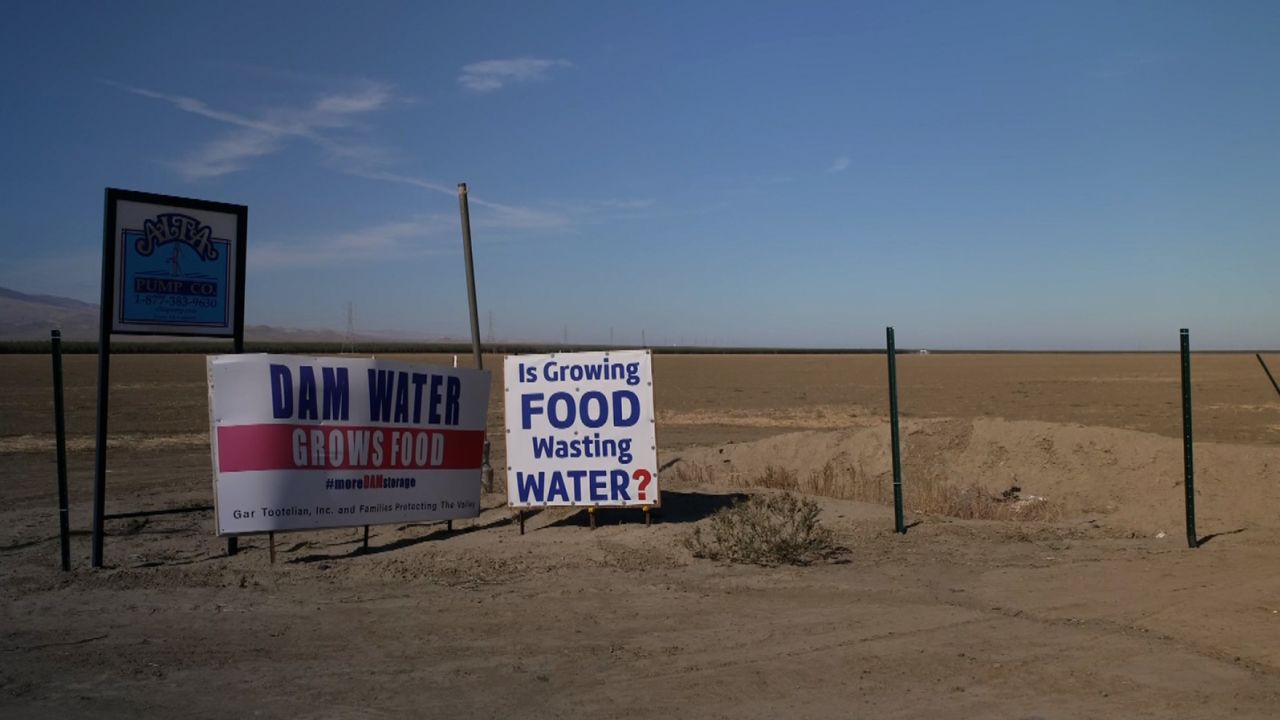
California’s soaring water prices are squeezing the farmers around Coalinga, too. Many are fallowing farmland to save water which has become unaffordable.
Farmers Deedee and Tom Gruber told CNN their water allocations have decreased to amounts insufficient to grow their 11 crops, which include thirsty walnuts and almonds. The Grubers estimate the water needed to grow just one of their crops next season — walnuts — would cost them $40,000.
“It would cost us more for water than what we will get for our walnuts,” Deedee Gruber told CNN.
California farmers say water scarcity, tightening water restrictions and now skyrocketing water prices are making it impossible for farmers to grow crops at all. The Grubers believe it will culminate in two ways: bankrupt farmers and higher food prices at the nation’s groceries.
From protests at the California’s state capitol this week to a living room full of worried farmers, California State Senator Melissa Hurtado, a Democrat who represents part of California’s southern Central Valley, has been listening to farmers’ stories about how drought and high water prices have affected them.
In an August letter, Hurtado and a bipartisan group of California legislators urged the US Justice Department to investigate “potential drought profiteering.” Hurtado suspects there could be price gouging in drought-stricken western states.
In an email response to Hurtado’s letter, the Justice Department said in October the complaint was “forwarded to the appropriate legal staff for further review.” The agency declined comment to CNN on what if any investigative actions it might take.
“People are making money off of less water availability,” Hurtado told CNN. “And that’s hurting real people — real farmers and real communities.”
[unable to retrieve full-text content]

The mighty bark that was Dogecoin's (DOGE -12.06%) bark at the end of last week softened into a whimper on Sunday. The effect of the cryptocurrency's frequent cheerleader Elon Musk buying Twitter (TWTR 0.66%) was obviously fading fast. As of mid-afternoon that day, the meme cryptocurrency's price was down by nearly 9% over the preceding 24 hours. All things considered, Dogecoin still rose 60% between Friday afternoon and Sunday evening, Eastern Time.
Like many other cryptocurrencies frozen by the crypto winter, Dogecoin wasn't doing particularly well before The Musk Effect took hold. As the Tesla (TSLA 1.52%) CEO neared success in his renewed pursuit of Twitter, however, investors rediscovered their love of the coin. When the deal was finally clinched, Dogecoin saw a very healthy price pop.
To his credit, Musk does more than simply talk the talk with the cryptocurrency. Against any solid logic or sense, Tesla itself holds dogecoin (or at least it did, as of this summer), and accepts it as a form of payment. In the past, the company's leader has tweeted enthusiastically from time to time about its merits.
So it seems the coin's subsequent slide is due in no small part to profit-taking, as many who loaded up on it are now booking their quick and easy gains now that the Twitter deal is done. It isn't hard to drive Dogecoin up or down sharply, as it's very inexpensively priced and any heavy action usually results in quite the price swing.
While Dogecoin can be volatile, it's likely that the recent roller coaster in the wake of the Musk/Twitter saga will level out. Following that, it'll probably pop and then drop after the Tesla and Twitter honcho makes a pronouncement about it. And with the unpredictable Musk, you just never know if and when that might happen.
Eric Volkman has no position in any of the stocks mentioned. The Motley Fool has positions in and recommends Tesla and Twitter. The Motley Fool has a disclosure policy.
[unable to retrieve full-text content]
Energy Prices: Australia Will Consider All Ways to Reduce Impact, Treasurer Says Bloomberg
How many products or services do you buy without knowing the price ahead of time? Chances are, the answer is almost none, if any. But in healthcare, getting services before knowing what you’ll be expected to pay is the norm.
A new survey adds to a body of evidence that uncertainty about healthcare costs deters people from seeking healthcare services.
In data released last week from healthcare AI firm AKASA, 35% of Americans surveyed said they would be deterred from seeing healthcare services for themselves if they didn’t know the price of that service. Just 40% said they would not be deterred by lack of available healthcare price information and one-quarter said they didn’t know if lack of healthcare pricing would get in the way of seeking services.
People are less likely to be deterred by lack of clear pricing when it comes to seeking care for a loved one.
Half (51%) of respondents said they would not be deterred from seeking out care for a dependent even if there were no price information and 18% said they would be deterred on behalf of a dependent. Similarly, half said they would not be deterred from seeking care for a parent or guardian and 20% said they would be deterred due to a lack of price information. Just under one-third (30%) of each group said they weren’t sure if they would be deterred from seeking care for a loved one without price information.
These findings are consistent with other surveys, such as a 2018 poll which showed that approximately 40% of Americans had skipped a recommended medical test or treatment, or avoided going to the doctor when they were sick, because of cost. Of those, 60% said they fear the cost of a serious illness.
Similarly, a 2020 survey showed that 39% of Americans were more afraid of the cost of Covid-19 infection that of getting the virus itself. In that data, 35% of people said they would consider putting off treatment for Covid-19 just to avoid medical bills and 60% said that medical bills were a top source of stress.
Adding to financial uncertainty and fear of unaffordable medical bills is a general lack of awareness that healthcare providers often offer tools to offset or help manage medical bills.
The AKASA survey asked respondents if their doctor or hospital offered payment plans or financial assistance. Nearly two-thirds (64%) of respondents said they did not know if these financial tools were available. Among uninsured respondents—who may need these tools more than people with insurance to help offset costs—80% said they did not know if financial support was available from their doctor or hospital.
Previously released survey findings from AKASA showed that nearly two-thirds of Americans had never even tried to find the price of a healthcare service. Those results showed that younger people and people on high-deductible health plans were more likely to have searched for healthcare pricing than others.